
Dell's smallest rack server now lists at $36,781. The reason isn't Dell.
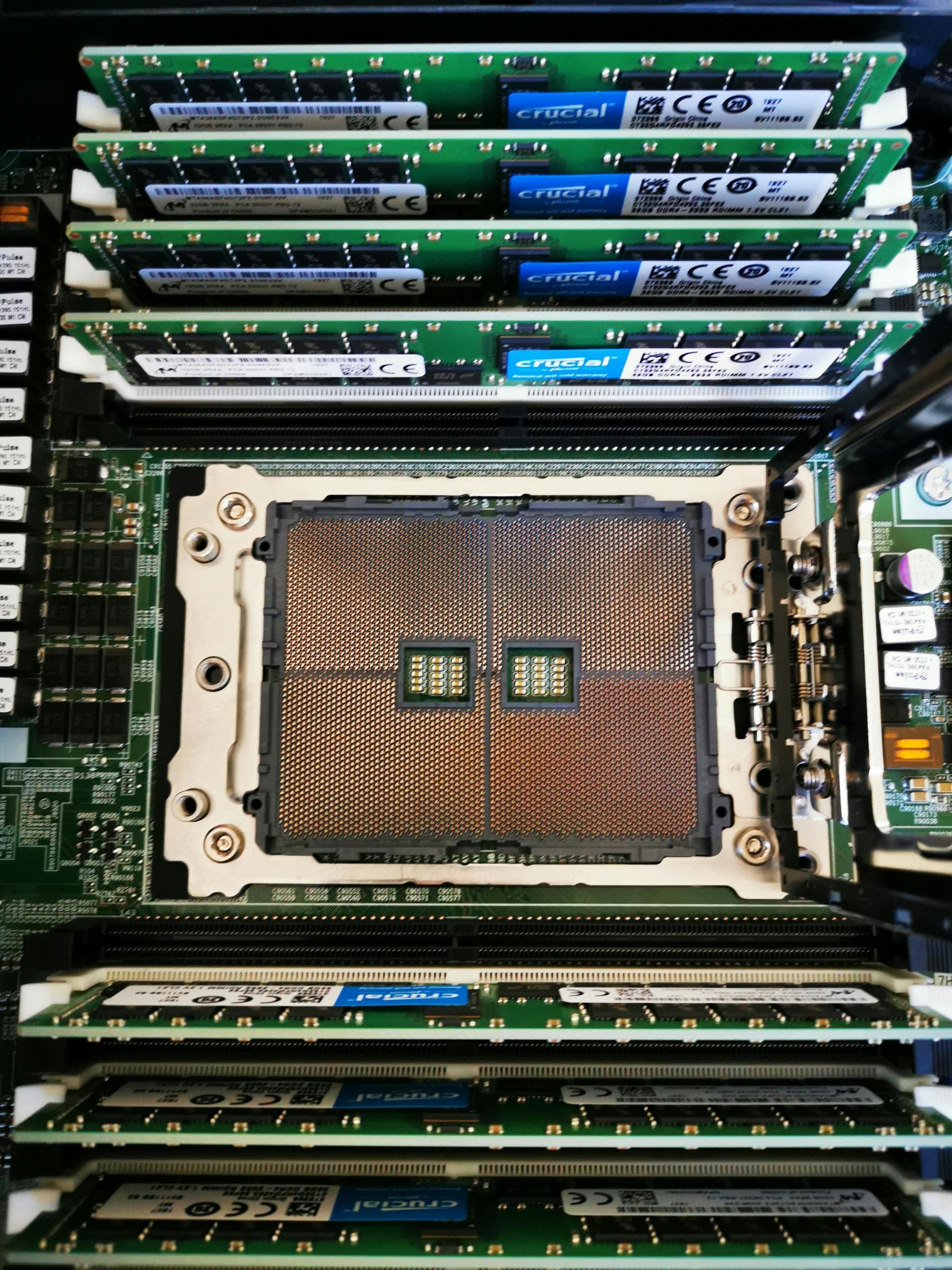
Last week we put together a hardware quote for a customer. The build was modest: a Dell PowerEdge R260 — the smallest single-socket rack server Dell sells — with 64GB of RAM, two SATA SSDs in a software mirror, a four-core Intel Xeon 6, one power supply, and four years of next-business-day support. Dell's list came back at $36,781.64 inclusive of GST and delivery. Twelve months ago, the same configuration would have listed closer to twenty thousand. A year before that, closer to twelve.
The interesting question isn't whether the price will come back down. It's what's actually driving the move. Because the answer changes how you think about owning compute.
The story isn't Dell
Dell and HPE both passed through a roughly 15% increase late last year on top of earlier hikes, and HPE has added another 12-20% on its ProLiant line in response to renewed tariff measures. Those moves matter. But they sit downstream of a much larger reallocation happening at the top of the supply chain.
Three companies make almost all of the world's DRAM: Samsung, SK Hynix and Micron. They have pivoted enormous amounts of cleanroom capacity over the last eighteen months toward high-bandwidth memory — the kind that sits next to an Nvidia or AMD AI accelerator. HBM stacks dies vertically and connects them with a far wider bus than a conventional DIMM, so the margin per wafer is in another league. The buyers are the hyperscalers — Microsoft, Google, Meta, Amazon — signing multi-year supply contracts for production that hasn't been made yet. SK Hynix is sold out of HBM, conventional DRAM and NAND through the end of 2026. Micron told customers last quarter it can fulfil only 55-60% of orders and has stopped quoting some products altogether.
What that does to the price of your DIMM
The same factories that make your server's 32GB UDIMMs make the memory that goes next to a GPU, and they're choosing the GPU side. That isn't irrational. It's the rational thing for a memory company to do when one set of customers is willing to pay several times the price per gigabyte. The downstream effect is unambiguous.
Counterpoint Research forecasts that a 64GB DDR5 RDIMM will cost roughly twice in late 2026 what it cost in early 2025 — which is itself already double the year before. The OEMs (Dell, HPE, Lenovo) pass this through with a small margin. The tariff overlay rides on top.
This is why even the R260, an entry-level box designed for branch offices and SMBs, now prices into territory once reserved for mid-tier enterprise gear. The increase isn't concentrated at the high end. AI demand pulls every memory SKU with it, because the underlying wafer capacity is the same. The CPU and chassis costs in that quote are largely unchanged. The story is entirely the contents of the DIMM slots.
The CPU and chassis costs are largely unchanged. The story is entirely the contents of the DIMM slots.
The 30-year assumption has quietly broken
The point isn't that any of this is unfair. It's that the assumption underneath how SMBs have bought servers for thirty years no longer holds. The assumption was that memory and storage got cheaper every year, refreshes paid for themselves in performance gains, and capex amortised against an asset whose replacement cost trended down. None of that is currently true. The replacement cost is trending sharply up, and it reflects buying decisions made in Seoul and Sunnyvale that have nothing to do with the business buying the server.
Add to that Broadcom's restructuring of VMware, which has doubled or tripled per-core hypervisor licensing for many customers in the same window, and the entire stack the SMB used to own has repriced upward at once. The hardware got more expensive. The software that runs on it got more expensive. The combined three-year cost of staying on the same architecture as five years ago is unrecognisable.
What this means for a Victorian SMB
For a business sitting on a five- or seven-year-old box, the refresh conversation now looks different than it used to. The replacement cost reflects something the business isn't getting back. The right starting point isn't a quote — it's a question about whether the workloads need to live on hardware the business owns at all.
Private cloud changes the shape of that exposure. We host workloads for our clients on infrastructure in Melbourne, which means the DRAM market gets absorbed across the whole estate rather than passing one customer's R260 quote through line by line. The underlying memory cost doesn't disappear. But the financial model stops being broken.
The R260 quote is a useful data point because it's the floor. If the smallest rack server Dell makes now lists at $36,781, the larger conversation — about whether to own compute at all — has already happened. Most businesses just haven't noticed yet.
Frequently asked questions
Why are server prices going up so much in 2026?
The driver is upstream of the server makers. Samsung, SK Hynix and Micron — the three companies that make almost all DRAM — have reallocated fab capacity from conventional server memory to high-bandwidth memory (HBM) for AI accelerators, where margins are an order of magnitude higher. Conventional DRAM is in shortage, contract prices rose around 172% across 2025, and the OEMs pass that through to server list prices.
Will server memory prices come back down?
Not on the timeline most SMBs are planning their refreshes around. Cleanroom capacity takes years to build, the hyperscalers have locked in multi-year HBM supply contracts through the end of 2026 and beyond, and the three memory makers have no commercial reason to redirect capacity back to lower-margin server DIMMs while AI demand holds. Counterpoint Research forecasts 64GB DDR5 RDIMM pricing roughly doubling again by late 2026.
Should we still buy a new server, or move to private cloud?
The default answer for the last thirty years was 'buy', because hardware costs trended down each year and capex was straightforward to amortise. That assumption is now broken. For most Victorian SMBs running 20-150 staff, the three-year cost of owning hardware now sits above the cost of running the same workloads on a managed private cloud where DRAM cost is absorbed across an estate. The right answer still depends on the workload profile, but the maths has flipped sign on the default.
Is this just Dell, or are HPE and Lenovo also affected?
All three. The underlying issue is the memory supply chain, not any specific OEM. HPE added a further 12-20% on its ProLiant pricing on top of last year's increases, partly in response to renewed tariff measures. Lenovo has moved in the same direction. There is no OEM you can switch to that doesn't buy DRAM from the same three suppliers.

Written by
Managing Director
John Zammit is Managing Director at Communicat IT, a Melbourne MSP serving Victorian SMBs since 1987. He writes about cloud economics, infrastructure strategy, and the gap between sales narratives and operational reality.